What Is Conjunctivitis (Pink Eye)?
Conjunctivitis is inflammation of the conjunctiva — the thin, transparent tissue lining the inside of the eyelid and covering the white of the eye. It is one of the most common eye conditions in the United States, affecting millions of people annually. "Pink eye" gets its name from the characteristic redness that appears when blood vessels in the conjunctiva become inflamed and dilated.
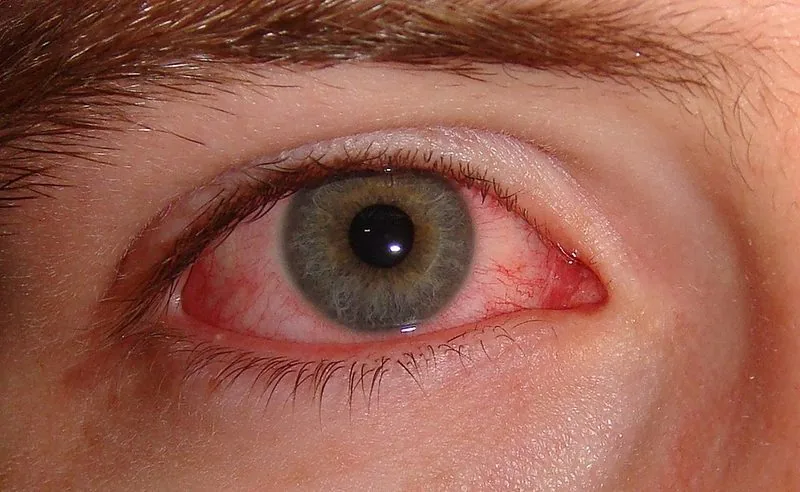
Conjunctivitis (pink eye): characteristic redness from inflamed blood vessels in the conjunctiva. Image: Wikimedia Commons.
Conjunctivitis has three major causes: bacterial (most commonly Staphylococcus aureus, Streptococcus pneumoniae, or Haemophilus influenzae), viral (most often adenovirus, but also herpes simplex virus and varicella), and allergic (triggered by pollen, pet dander, dust mites, or contact lens solutions). Accurately distinguishing between these types is essential because bacterial conjunctivitis benefits from antibiotic drops, while viral and allergic forms are managed differently.
our board-certified provider, uses clinical history, discharge characteristics, and associated symptoms to differentiate conjunctivitis types during your telehealth visit. Bacterial conjunctivitis typically presents with thick, purulent (pus-like) yellow-green discharge, while viral conjunctivitis usually presents with watery discharge and is often associated with an upper respiratory infection. Allergic conjunctivitis is distinguished by intense itching and bilateral involvement.
Common Symptoms of Pink Eye
Diffuse redness of the conjunctiva — hallmark sign of all conjunctivitis types
Watery in viral/allergic; thick yellow-green pus in bacterial conjunctivitis
Dried discharge causing eyelids to stick together, especially upon waking
Intense itching strongly suggests allergic origin; burning is common in all types
Photophobia may occur, particularly in viral conjunctivitis or when cornea is involved
Mild blurring from discharge is common; persistent blurry vision warrants urgent evaluation
How InnoCre Treats Conjunctivitis Online
During your telehealth visit, your provider will ask detailed questions about the nature of your discharge, how many eyes are involved, whether you have cold symptoms or seasonal allergies, and whether you wear contact lenses. You may be asked to gently pull down your lower eyelid on camera for visual inspection of discharge and conjunctival redness.
For suspected bacterial conjunctivitis, antibiotic eye drops or ointment will be prescribed. Common options include erythromycin ophthalmic ointment (particularly effective for neonates and mild bacterial infections), ofloxacin ophthalmic drops or tobramycin drops for adults and older children. The course is typically 5–7 days. Viral conjunctivitis is self-limiting and managed with cool compresses, artificial tears, and good hygiene — antibiotics are not effective and will not be prescribed unless there is evidence of bacterial superinfection.
For allergic conjunctivitis, treatment includes topical antihistamine/mast cell stabilizer eye drops such as olopatadine (Pataday) or ketotifen (Zaditor), along with oral antihistamines like cetirizine or loratadine. Avoiding the triggering allergen and using artificial tears to flush the allergen from the eye surface are also recommended.
⚠️ When to Go to the Emergency Room
Conjunctivitis is usually benign, but the following signs require immediate in-person evaluation:
- •Severe eye pain — significant pain (not just irritation) can indicate keratitis, iritis, or acute angle-closure glaucoma
- •Vision loss or significant vision changes — any sudden decrease in visual acuity requires urgent ophthalmology evaluation
- •Eye trauma — any recent injury to the eye should be evaluated in person to rule out foreign body, globe rupture, or hyphema
- •Signs of corneal ulcer — severe pain, intense photophobia, and a white spot on the cornea require ophthalmology consultation
- •Very swollen, protruding eyelids — this pattern may indicate orbital cellulitis, a serious infection requiring IV antibiotics