Cold sores almost always announce themselves before you can see them. The earlier you act, the milder the outbreak. This guide explains what causes cold sores, how to recognize the very first warning signs, and how prescription antivirals like valacyclovir, acyclovir, and famciclovir — started at the first tingle — can shorten an outbreak or stop it from forming, along with what you can do over the counter and when it is time to involve a provider.
Need Care Today?
Get a same-day telehealth visit and an antiviral prescription from a board-certified provider.
Licensed in PA, MD, WA & DE
Book a Visit →What Causes Cold Sores
Cold sores (also called fever blisters) are caused by the herpes simplex virus, most often type 1 (HSV-1). HSV-1 is extremely common: more than half of American adults carry it, usually acquired in childhood from a kiss or shared utensil. Once you have the virus, it stays in your body for life, lying dormant in a cluster of nerve cells near your jaw. Most of the time it causes no problems. Periodically, though, it reactivates, travels back down the nerve to the skin, and produces an outbreak on or around the lips.
It is worth saying clearly: having cold sores is not a reflection of your hygiene or your sexual history. It is one of the most common viral infections on the planet. While HSV-1 typically causes oral cold sores and HSV-2 typically causes genital herpes, either type can affect either location, which is why providers treat them with the same family of antiviral medications.
How to Recognize a Cold Sore Early
Cold sores follow a predictable sequence, and recognizing the earliest stage is the single most important factor in treating one quickly:
- The tingle (prodrome): Hours to a day before anything is visible, most people feel a tingling, itching, burning, or tight sensation at a specific spot on the lip. This is the window when antiviral treatment works best.
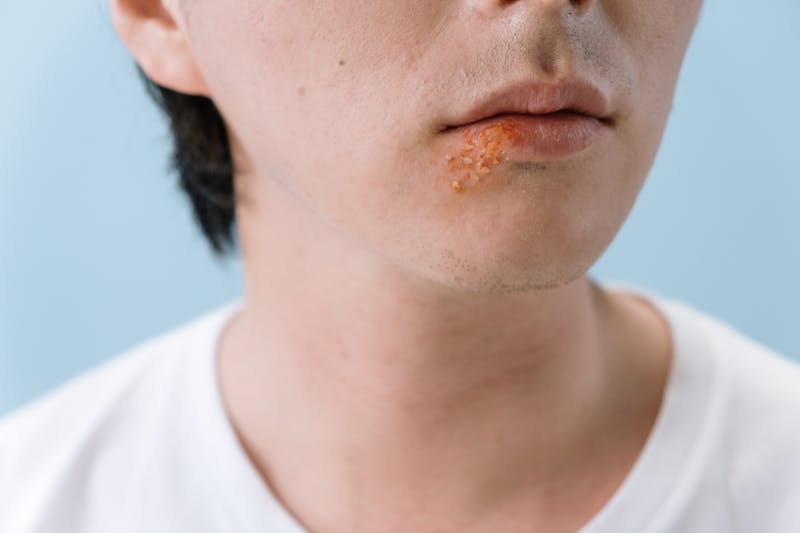
- Blister: Small fluid-filled blisters form, often in a cluster, usually at the border of the lip.
- Ulcer: The blisters break open, leaving a shallow, sometimes painful open sore. This is the most contagious stage.
- Crust: The sore dries and forms a yellow-brown scab, which gradually heals over several days.
Left untreated, a typical outbreak runs its full course in about 7 to 14 days and heals without scarring. Common triggers that reactivate the virus include sun exposure on the lips, fever or other illness, emotional stress, poor sleep, hormonal changes such as menstruation, and lip trauma from dental work or chapped skin. Learning your personal triggers helps you anticipate outbreaks and treat them the moment they start.
Prescription Antiviral Treatment
Oral antiviral medications are the most effective treatment for cold sores, and they work best when started at the first sign of tingling rather than after blisters appear. When clinically appropriate, a provider may prescribe one of three antivirals:
- Valacyclovir: Often the most convenient option. A common regimen is a high-dose, one-day course taken at the first symptom, which can shorten healing time or, if you catch it early enough, prevent the sore from fully developing.
- Acyclovir: The longest-established option, typically taken several times a day for a few days. It is effective and inexpensive but requires more frequent dosing.
- Famciclovir: Another well-tolerated oral antiviral, also often used as a short, early-start course.
The key principle with all three is the same: start early. Because the tingle can strike with little warning, many people who get frequent cold sores keep a prescription on hand so they can begin treatment within hours. For people with six or more outbreaks a year, or whose outbreaks are severe or disruptive, a provider may recommend daily suppressive therapy, which substantially reduces how often outbreaks occur and lowers the chance of spreading the virus to others. The right dose and approach depend on your history, so this is a conversation to have with your provider.
Over-the-Counter and Self-Care Options
Several non-prescription options can help, though none match oral antivirals for speed and reliability:
- Docosanol (Abreva): The only FDA-approved over-the-counter cream shown to shorten cold sore duration. Applied at the very first tingle, it can trim healing time by roughly half a day.
- Pain relief: Over-the-counter acetaminophen or ibuprofen can ease discomfort, and topical numbing gels with benzocaine or lidocaine can help with a painful sore.
- Protect and soothe: Keep the area clean, apply a lip balm with SPF 30 or higher daily to prevent sun-triggered outbreaks, and use a cold compress for swelling.
Two important don'ts: do not pick at or pop the sore, which can spread the virus to your eyes or other skin and raise the risk of bacterial infection, and do not share lip balm, utensils, towels, or razors during an outbreak. Cold sores are most contagious from the first tingle until the sore has fully crusted and healed, though the virus can occasionally shed without any visible sore.
When to See a Provider
Most cold sores are harmless and heal on their own, but you should reach out to a provider promptly in any of these situations:
- Outbreaks that are frequent (about six or more a year), severe, or interfering with your daily life — you may be a candidate for daily suppressive therapy.
- A sore that does not begin healing within two weeks, keeps spreading, or looks infected (increasing redness, swelling, pus, or worsening pain).
- Any sore or symptoms near the eye. Herpes affecting the eye (herpes keratitis) can threaten your vision and needs urgent in-person evaluation.
- You are immunocompromised — from chemotherapy, HIV, organ transplant, or immune-suppressing medications — in which case outbreaks can be more severe and warrant prompt antiviral treatment.
- You have eczema or atopic dermatitis and develop a spreading rash with cold sore symptoms. This can signal eczema herpeticum, a widespread herpes infection of the skin that is a medical emergency requiring immediate care.
- A newborn or infant is exposed to a cold sore, or you are pregnant and concerned about transmission.
For routine cold sores, telehealth is an ideal way to get treated fast. A provider can confirm the diagnosis from your history and a photo of the lesion if needed, then send an antiviral prescription to your pharmacy the same day — often within the early-treatment window that makes the biggest difference. Herpes treatment through InnoCre is available for patients 12 and older in Pennsylvania, Maryland, Washington, and Delaware.
Frequently Asked Questions
What is the fastest way to get rid of a cold sore?
The fastest treatment is high-dose valacyclovir (2 grams twice in one day) taken at the very first sign of tingling or burning. Started within the first 24 hours, this one-day treatment can reduce healing time by 1-2 days or even prevent the sore from fully developing. Having a prescription on hand before an outbreak occurs ensures you can treat immediately.
Are cold sores the same as herpes?
Yes. Cold sores are caused by herpes simplex virus, most commonly type 1 (HSV-1). They are the same virus family as genital herpes (usually HSV-2, though HSV-1 can also cause genital outbreaks). Cold sores are extremely common — over half of Americans carry HSV-1 by adulthood. Having cold sores does not imply anything about sexual behavior.
Can I get a cold sore prescription through telehealth?
Yes. Cold sores are one of the most common conditions treated via telehealth. A provider can prescribe antiviral medication (valacyclovir or acyclovir) based on your history and symptoms without an in-person exam. Prescriptions are typically sent to your pharmacy the same day.
How long is a cold sore contagious?
Cold sores are most contagious from the time symptoms first appear (tingling, burning) until the sore has completely healed and new skin has formed — typically 7 to 14 days. The virus can also shed asymptomatically, meaning transmission is possible even without a visible sore, though the risk is much lower.
Should I take antiviral medication every day to prevent cold sores?
Daily supp
What triggers a cold sore outbreak?
Common triggers include sun exposure on the lips, illness or fever, emotional stress, lack of sleep, hormonal changes (such as menstruation), and lip trauma from dental work or chapped lips. Identifying personal triggers can help reduce outbreak frequency, and daily SPF lip balm is one of the most effective preventive steps.
What is the difference between a cold sore and a canker sore?
Cold sores are caused by herpes simplex virus and appear on the outside of the lips or around the mouth as fluid-filled blisters. Canker sores are small ulcers inside the mouth on soft tissue, are not contagious, and are not caused by a virus. Antivirals treat cold sores but do not help canker sores.
Can I pop a cold sore to make it heal faster?
No. Popping or picking at a cold sore can spread the virus to other parts of the skin or eyes, increase the risk of bacterial infection, and worsen scarring. The sore should be allowed to crust over and heal on its own, while antiviral medication shortens the overall duration.
Can my adolescent get cold sore treatment online?
Yes. InnoCre treats adolescents 12 and older, and cold sores are a routine telehealth visit for this age group. A provider can confirm the diagnosis based on history and a photo of the lesion if needed, then send an antiviral prescription to the patient's pharmacy.
Do over-the-counter creams like docosanol actually work?
Docosanol (Abreva) can modestly shorten healing time by about half a day when applied at the very first sign of tingling, but it is less effective than prescription oral antivirals. For frequent or severe outbreaks, valacyclovir or acyclovir prescribed by a provider typically gives faster and more reliable results.
How does an InnoCre telehealth visit work?
After you book, you complete a short intake form, then connect with a board-certified provider by video on the same day in most cases. The provider reviews your symptoms and history, orders lab work at a local lab if needed, and sends any prescription to the pharmacy of your choice. A new-patient visit is a flat $68 with no insurance required.
Get the Care You Need Today
A board-certified provider can evaluate your symptoms and recommend treatment. Same-day visits available for patients in Pennsylvania, Maryland, Washington, and Delaware.
Book a Visit →Visits start at $68 · HSA/FSA accepted · PA, MD, WA & DE
Atul S. Vellappally, DNP, CRNP, FNP-BC
Founder, InnoCre Telehealth. Board-certified Family Nurse Practitioner with doctoral-level training in evidence-based and precision medicine. Licensed in Pennsylvania, Maryland, Washington, and Delaware.
This article is for informational purposes only and does not constitute medical advice. If you are experiencing a medical emergency, call 911.
Related Services
Related Articles
Related Services