Most wasp stings can be treated at home with ice, a basic antihistamine, and time. But some reactions escalate — and knowing the difference between normal swelling and a dangerous response can matter a great deal.
Need Care Today?
Get a same-day telehealth visit with a board-certified provider.
Licensed in PA, MD, WA & DE
Book a Visit →Immediate First Aid for a Wasp Sting
The moments immediately following a wasp sting matter. Unlike honeybees, wasps have smooth stingers and can sting multiple times, so your first priority is to move away from the area where the sting occurred to avoid additional stings. Once you are in a safe location, wash the sting site with soap and water to reduce the risk of infection. Wasp venom is injected directly into the skin, and cleaning the wound helps remove any surface bacteria that could enter through the puncture.
After cleaning, apply a cold compress or ice wrapped in a cloth to the area for 10 to 15 minutes. This helps constrict blood vessels, slowing the spread of venom and reducing both swelling and pain. Avoid applying ice directly to the skin, as this can cause cold injury. If the sting is on a hand or arm, remove any rings or bracelets before swelling begins, since jewelry can become dangerously tight as the tissue swells.
Resist the urge to scratch the sting site, even though itching can be intense. Scratching breaks the skin barrier and increases the risk of secondary bacterial infection. If you have been stung on a limb, keeping it elevated can help minimize swelling. For mild stings, these first aid measures are often all that is needed, and symptoms will begin to improve within a few hours.
How to Reduce Swelling and Pain
Swelling and pain after a wasp sting are caused by the body's inflammatory response to the injected venom, which contains a mixture of histamine, serotonin, and other compounds that trigger the immune system. Over-the-counter medications are your most effective tools for managing these symptoms at home. An oral antihistamine such as cetirizine, loratadine, or diphenhydramine can help reduce itching and swelling by blocking the histamine response. Non-sedating options like cetirizine or loratadine are preferable during the daytime.
For pain relief, a nonsteroidal anti-inflammatory drug (NSAID) such as ibuprofen or naproxen addresses both pain and inflammation simultaneously. Acetaminophen can be used as an alternative for pain but does not have anti-inflammatory properties. Topical treatments can also provide localized relief:
- Hydrocortisone cream (1%) applied to the sting site to reduce redness and itching
- A paste of baking soda and water, which may help neutralize some of the acidic venom components
- Calamine lotion for soothing persistent itch
- Continued cold compresses, 10 minutes on and 10 minutes off, for the first 24 to 48 hours
Keep the sting area clean and dry. Avoid applying home remedies such as vinegar, meat tenderizer, or toothpaste, as these have no proven clinical benefit and may irritate the skin further. If swelling continues to expand beyond the immediate sting site after 48 hours, or if you develop increasing redness with warmth and streaking, contact a healthcare provider to rule out infection.
Wasp Sting vs Bee Sting: Key Differences

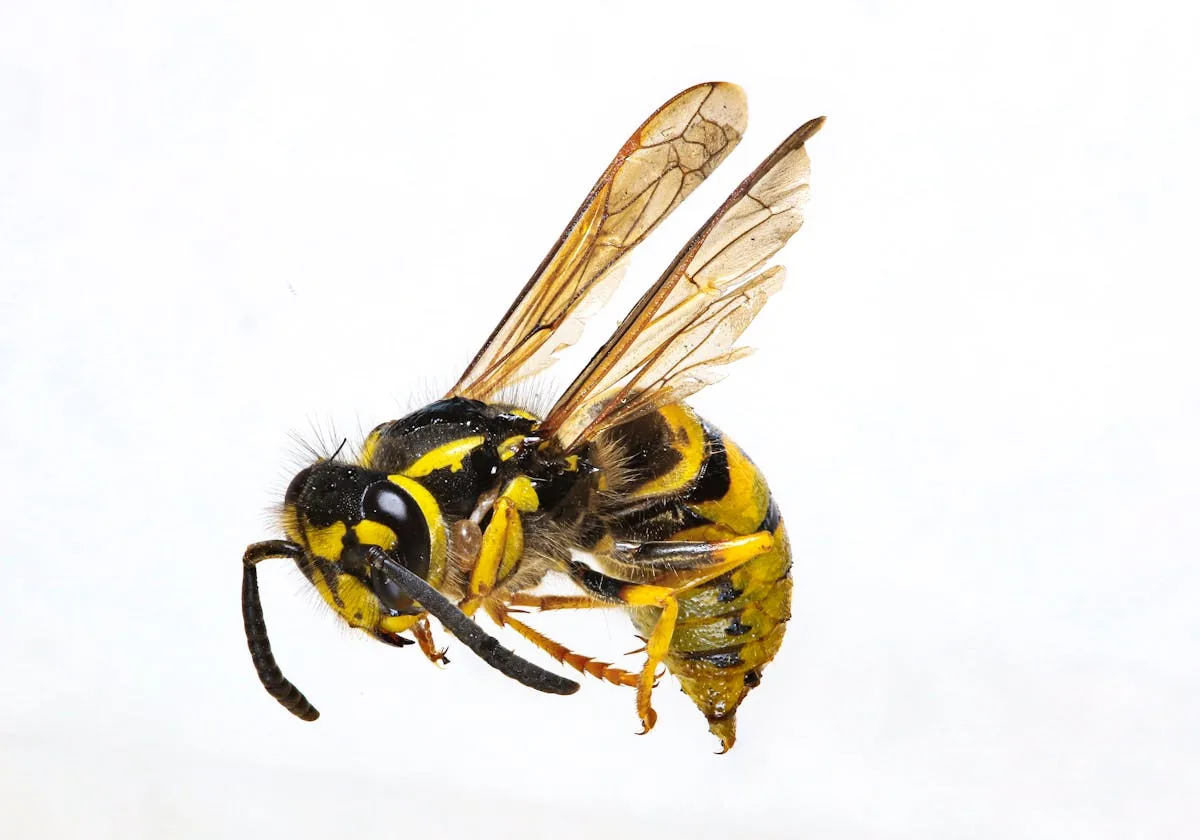
Unlike bees, wasps have smooth stingers and can sting multiple times.
Although wasp stings and bee stings are often discussed interchangeably, there are important clinical and practical differences between the two. The most significant distinction is anatomical: honeybees have barbed stingers that embed in the skin and detach from the bee's body, which means a honeybee can only sting once and then dies. Wasps and hornets, on the other hand, have smooth stingers that retract easily, allowing a single wasp to sting multiple times in rapid succession. This is why wasp encounters sometimes result in several stings at once.
Because a honeybee's stinger remains lodged in the skin with the venom sac still attached, it continues to pump venom for up to a minute after the initial sting. This is why prompt removal of a bee stinger is essential. The recommended technique is to scrape it out sideways with a flat edge, such as a credit card, rather than pinching it with tweezers, which can squeeze additional venom into the wound. With wasp stings, there is no stinger left behind to remove.
The venom composition also differs. Bee venom contains melittin as its primary pain-causing compound, while wasp venom relies on a different mixture of peptides and enzymes including phospholipases and hyaluronidase. In practice, both can cause similar local reactions and both carry the risk of anaphylaxis in sensitized individuals. People who are allergic to one are not necessarily allergic to the other, since the venom proteins are immunologically distinct. If you have a known allergy to either, carry your prescribed epinephrine auto-injector at all times.
Signs of an Allergic Reaction
While most wasp stings cause only localized pain and swelling, some individuals develop a systemic allergic reaction that can become life-threatening within minutes. Anaphylaxis is the most severe form of allergic reaction and requires immediate emergency treatment. It occurs when the immune system overreacts to venom proteins, triggering a massive release of histamine and other chemicals that affect multiple organ systems simultaneously.
Call 911 immediately if you or someone near you develops any of these symptoms after a wasp sting:
- Difficulty breathing, wheezing, or a feeling of throat tightness
- Swelling of the lips, tongue, or throat
- Dizziness, lightheadedness, or fainting
- A rapid or weak pulse
- Widespread hives or flushing that extends far beyond the sting site
- Nausea, vomiting, or abdominal cramping
- A sense of impending doom or sudden severe anxiety
If the person carries an epinephrine auto-injector (such as an EpiPen), it should be administered immediately into the outer thigh, even before emergency services arrive. Epinephrine is the only first-line treatment for anaphylaxis and works by reversing airway constriction and supporting blood pressure. Antihistamines alone are not sufficient to treat anaphylaxis. After any anaphylactic episode, the individual should be evaluated for venom immunotherapy (allergy shots), which can reduce the risk of future severe reactions by up to 98 percent. An allergy treatment consultation can help you develop a long-term management plan.
When Swelling Is Normal vs Concerning
Some degree of swelling after a wasp sting is completely normal and is a sign that your immune system is responding to the venom. A typical local reaction involves redness and swelling confined to a two- to three-inch area around the sting site, peaking within the first 24 to 48 hours. This is the body's standard inflammatory response and does not indicate an allergy. Pain at the site is usually sharpest in the first few hours and then transitions to a dull ache or itch.
A large local reaction is more dramatic but still not the same as a systemic allergic reaction. In a large local reaction, swelling may extend six inches or more from the sting site and can involve an entire limb. For example, a sting on the hand may cause the entire forearm to swell. This type of reaction typically peaks at 48 to 72 hours and can take 7 to 10 days to fully resolve. While uncomfortable and sometimes alarming, large local reactions are mediated primarily by local immune cells and carry only a small (5 to 10 percent) risk of progressing to a systemic reaction with future stings.
Swelling becomes concerning when it is accompanied by signs of infection or systemic involvement. Watch for increasing redness that develops red streaks extending outward from the site, pus or drainage, warmth and tenderness that worsens after the first 48 hours, or fever. These findings suggest a secondary bacterial infection, such as cellulitis, and require antibiotic treatment. If you develop hives or a rash on areas of the body distant from the sting, that suggests a systemic reaction and warrants prompt medical evaluation.
How Long Wasp Sting Symptoms Last
For the majority of people, wasp sting symptoms follow a predictable timeline. The initial sharp, burning pain is most intense in the first 15 to 30 minutes after the sting. Swelling and redness at the site develop over the next several hours, and itching often replaces pain as the dominant symptom by the end of the first day. By 48 to 72 hours, most normal local reactions have peaked and begin to subside.
The general timeline for wasp sting recovery looks like this:
- 0 to 2 hours: Sharp pain, initial redness, and the beginning of localized swelling
- 2 to 24 hours: Pain gradually decreases, swelling and itching increase
- 24 to 48 hours: Swelling typically peaks, itching may be most intense
- 3 to 5 days: Swelling and redness gradually resolve for normal reactions
- 7 to 10 days: Large local reactions fully resolve; a small, firm bump may persist at the sting site
Multiple stings from the same encounter may extend this timeline because the total venom load is higher. People who receive 10 or more stings simultaneously should seek medical attention regardless of whether they have a known allergy, as a large venom dose can cause systemic toxicity including muscle breakdown, kidney injury, and blood pressure instability even in non-allergic individuals. If your symptoms are not following the expected pattern of gradual improvement, or if new symptoms appear after the first 48 hours, consult a healthcare provider.
When to See a Provider for a Sting
Most wasp stings can be safely managed at home, but there are several situations where professional medical evaluation is warranted. If you are experiencing any signs of anaphylaxis, call 911 immediately rather than scheduling a visit. For non-emergency concerns, a provider can evaluate your symptoms, prescribe medications when over-the-counter options are insufficient, and help you plan for future sting prevention.
You should see a provider if you experience any of the following after a wasp sting:
- Swelling that continues to expand beyond 48 hours or involves an entire limb
- Signs of infection: increasing redness, warmth, pus, red streaking, or fever
- Symptoms that are not improving after 7 days
- A sting inside the mouth or throat, which can cause airway swelling
- Multiple stings (10 or more) from a single encounter
- A history of a previous severe allergic reaction to any insect sting
- Persistent large local reactions with each sting, which may benefit from venom immunotherapy evaluation
An urgent care telehealth visit is an efficient way to have a provider assess your sting reaction, especially for concerns about infection, large local reactions, or medication guidance. Your provider can prescribe oral steroids for severe local swelling, antibiotics if infection is suspected, or stronger antihistamines if over-the-counter options are not controlling your symptoms. For patients with a history of systemic reactions, a telehealth visit is also an opportunity to ensure your epinephrine auto-injector prescription is current and to discuss referral for allergy evaluation and treatment.
Frequently Asked Questions
Do wasps die after they sting you?
No. Unlike honeybees, wasps can sting multiple times because their stinger is smooth and does not detach. This means a single wasp can deliver multiple stings.
How long does a wasp sting last?
Pain and swelling from a wasp sting typically peak within 24 to 48 hours and resolve within 3 to 7 days. Large local reactions with significant swelling may take up to 10 days to fully resolve.
When should I go to the ER for a wasp sting?
Seek emergency care immediately if you experience difficulty breathing, swelling of the face, lips, or throat, dizziness or fainting, rapid heartbeat, or a widespread rash. These are signs of anaphylaxis.
What helps reduce wasp sting swelling?
Apply ice wrapped in a cloth for 10 minutes on, 10 minutes off. Take an over-the-counter antihistamine for itching and an NSAID like ibuprofen for pain. Keep the area clean and elevated when possible.
Why is my wasp sting swelling getting worse after 48 hours?
Increasing swelling after 48 hours is not normal and may indicate a secondary infection or a delayed allergic reaction. Signs to watch for include expanding redness, warmth, pus, fever, or swelling spreading beyond the sting site. See a provider if swelling worsens rather than improving after the first day.
What should I know about treatment for wasp sting?
When evaluating treatment for wasp sting, clinicians consider cold pack, removing the stinger, and bee or wasp sting. An InnoCre telehealth visit covers a same-day symptom review, lab orders at a local lab when needed, and a prescription sent to your pharmacy if appropriate.
How does an InnoCre telehealth visit work?
After you book, you complete a short intake form, then connect with a board-certified provider by video on the same day in most cases. The provider reviews your symptoms and history, orders lab work at a local lab if needed, and sends any prescription to the pharmacy of your choice. A new-patient visit is a flat $68 with no insurance required.
Sources
Clinical references used in this article:
- Getting Tested for STIs. Centers for Disease Control and Prevention.
- STI Screening Recommendations. Centers for Disease Control and Prevention.
- Sexually Transmitted Infections. Centers for Disease Control and Prevention.
- Bee, Wasp, Hornet, or Yellow Jacket Sting. MedlinePlus Medical Encyclopedia.
Get the Care You Need Today
A board-certified provider can evaluate your symptoms and recommend treatment. Same-day visits available for patients in Pennsylvania, Maryland, Washington, and Delaware.
Book a Visit →Visits start at $68 · HSA/FSA accepted · PA, MD, WA & DE
Atul S. Vellappally, DNP, CRNP, FNP-BC
Founder, InnoCre Telehealth. Board-certified Family Nurse Practitioner with doctoral-level training in evidence-based and precision medicine. Licensed in Pennsylvania, Maryland, Washington, and Delaware.
This article is for informational purposes only and does not constitute medical advice. If you are experiencing a medical emergency, call 911.
Related Services