Primary care through telehealth is not a different kind of medicine — it is the same first-contact, longitudinal care you would receive in a clinic, delivered over secure video or phone. The clinical scope is mostly the same as in person, with clear limits where physical examination, procedures, or vaccinations are required. This guide explains, factually, what virtual primary care covers, where it stops, and how it pairs with an in-person clinician when needed.

Need a Primary Care Visit?
30-minute telehealth visits with a board-certified Family Nurse Practitioner.
Licensed in PA, MD, WA & DE
Book a Visit →What Primary Care Through Telehealth Actually Is
Primary care is the layer of medicine concerned with prevention, first evaluation of new symptoms, and ongoing management of chronic conditions. The Institute of Medicine defines it as "the provision of integrated, accessible health care services by clinicians who are accountable for addressing a large majority of personal health care needs, developing a sustained partnership with patients, and practicing in the context of family and community." Telehealth is simply one mode of delivering that care — a secure video or phone visit between a licensed clinician and a patient.
In practical terms, a virtual primary care visit covers history-taking, medication review and refills, lab and imaging orders, mental health screening, lifestyle counseling, acute illness evaluation, chronic disease management, and care coordination with other providers. What it cannot include is anything that requires the clinician to physically touch you — auscultation of the heart and lungs, palpation of the abdomen, hands-on neurological assessment, otoscopy, or procedures like joint injections or vaccinations.
The U.S. Department of Health and Human Services and the American Telemedicine Association both classify primary care as one of the clinical areas best suited to telehealth, provided the visit is appropriately scoped and the patient has an in-person option when needed.
What Virtual Primary Care Handles Well
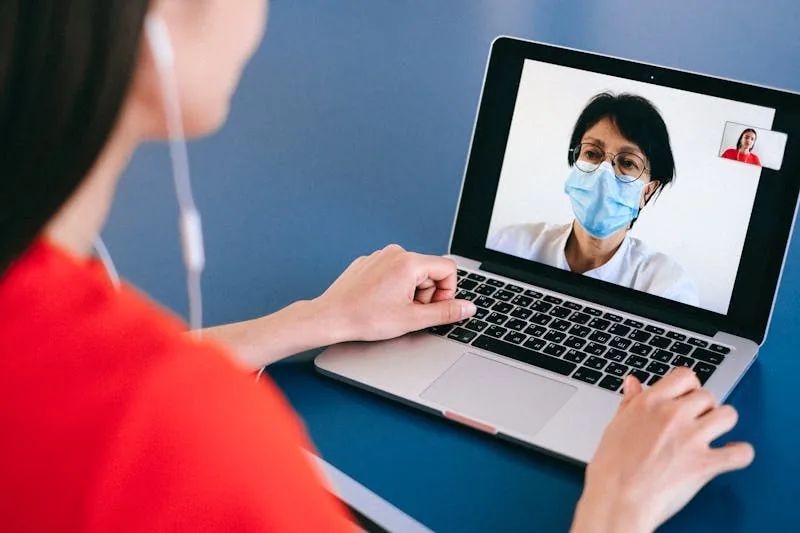
Most of the work of primary care — talking, reviewing, prescribing, ordering — translates cleanly to video.
The conditions and tasks below are well within the scope of virtual primary care and are supported by multiple systematic reviews and clinical-practice guidelines:
- Stable chronic disease management: hypertension, type 2 diabetes, hyperlipidemia, hypothyroidism, asthma, allergic rhinitis, GERD, and most stable autoimmune and dermatologic conditions, provided the patient can self-monitor at home and access a lab.
- Acute, non-emergent illness: UTIs, sinus infections, bronchitis, skin rashes, conjunctivitis, vaginal infections, and many other common conditions where history and a careful visual exam are usually enough.
- Prescription refills: non-controlled medications including blood pressure drugs, statins, metformin, insulin (with appropriate monitoring), levothyroxine, inhalers, antidepressants, birth control, and allergy medications.
- Mental health screening and management: PHQ-9 and GAD-7 screening, brief counseling, prescription of non-controlled antidepressants and anxiolytics (SSRIs, SNRIs, buspirone), and referrals for therapy.
- Preventive care planning: reviewing USPSTF-recommended screenings — colorectal, cervical, breast, lung — and ordering them through local labs and imaging centers.
- Lab and imaging orders: comprehensive metabolic panels, lipid panels, A1C, thyroid panels, CBC, vitamin levels, urinalysis, STI panels, X-rays, ultrasounds, mammograms.
- Specialist referrals: sending you to in-person dermatology, cardiology, GI, GYN, or other specialists when their hands or imaging are needed.
A 2023 systematic review and meta-analysis published in JAMA Network Open compared telehealth and in-person care across chronic disease management studies and found no significant difference in clinical outcomes, with patient-reported satisfaction generally higher in the telehealth arm. The American Academy of Family Physicians has issued similar position statements: telehealth, used appropriately, achieves outcomes equivalent to in-person primary care for the conditions described above.
What Virtual Primary Care Cannot Do
Being honest about telehealth's limits is part of practicing it safely. The list below is not exhaustive, but it covers the most common scenarios where a virtual visit is the wrong tool:
- True medical emergencies: chest pain, shortness of breath at rest, signs of stroke (facial droop, arm weakness, slurred speech), severe bleeding, anaphylaxis, loss of consciousness, suspected blood clots, and head injury with confusion. Call 911 or go to an emergency department.
- Hands-on physical examination: auscultation of the heart and lungs, palpation of the abdomen, fundoscopic and otoscopic exam, full neurologic exam, breast exam, pelvic exam, prostate exam, joint exam under stress.
- Procedures: immunizations, joint injections, cryotherapy, skin biopsy, suturing, IUD placement, abscess incision and drainage, blood draws performed in office, point-of-care testing (rapid strep, flu, COVID, urine dip on a sample collected in clinic).
- First prenatal visit and obstetric care: requires hands-on assessment and ultrasound. Coordinate with an OB or family-medicine practice with prenatal services.
- Complex pediatric assessment: well-child checks with growth measurements, developmental exam, and immunizations are in-person care. Older children can be seen virtually for some acute issues.
- Controlled substances: federal DEA rules and most ethical telehealth practices, including InnoCre, restrict prescribing of stimulants, benzodiazepines, opioids, and most controlled antipsychotics through telehealth. These require an in-person prescriber.
- Suspicious lesions and masses: any skin lesion that may need biopsy, a new breast lump, a palpable abdominal mass, or new lymphadenopathy that warrants examination needs hands-on assessment.
A responsible telehealth clinician will tell you, during the visit, when your problem falls into one of these categories and will help you find the right level of care. This is the same triage judgment a primary care clinician applies in clinic — the only difference is the route.
How a Typical Visit Works
A primary care telehealth visit follows the same clinical structure as an in-person appointment. Before the visit, you complete intake paperwork that captures your medical history, current medications, allergies, family history, and reason for the visit. At InnoCre, we also ask for the contact information of any in-person providers you see so that we can share notes and coordinate care.
During the visit itself, the clinician confirms your identity and location (telehealth licensure is state-based, so we verify you are physically located in Delaware, Maryland, or Washington at the time of the visit), reviews the chief complaint and history, conducts a focused visual exam where applicable — looking at a rash, observing breathing pattern, watching gait — and discusses an assessment and plan with you. Visits at InnoCre are scheduled for 30 minutes, which is meaningfully longer than the 7- to 15-minute average primary care visit in the United States. The extra time is not a luxury. It is what is needed to think carefully about a problem.
After the visit, you receive a written visit summary, any prescriptions are sent electronically to your pharmacy, and lab or imaging orders are sent to the closest convenient draw site or imaging center. Results return to the clinician, who reviews them with you in a follow-up visit or via secure message.
Labs, Imaging, and Specialist Referrals
One of the most common misconceptions about telehealth is that virtual clinicians cannot order tests. They can, and routinely do. Most telehealth practices, including InnoCre, integrate with Quest Diagnostics and LabCorp, so your blood work order is in their system the moment you finish your visit. Imaging orders go to local radiology centers in the same way.
Standard primary care lab panels ordered via telehealth include the comprehensive metabolic panel, lipid panel, hemoglobin A1C, thyroid-stimulating hormone (TSH), free T4, vitamin D, vitamin B12, complete blood count, urinalysis, and STI screening. Imaging orders include X-rays for musculoskeletal complaints, ultrasounds for abdominal or pelvic concerns, mammograms for breast cancer screening, and CT or MRI when clinically indicated.
For care that requires hands-on assessment, a telehealth clinician refers you to in-person specialists. Care coordination — making sure your records, labs, and clinical reasoning travel with you — is a core function of primary care and one the American Academy of Family Physicians considers essential to any medical home, virtual or otherwise.
Chronic Disease Management
Most stable chronic conditions can be safely managed through telehealth when three conditions are met: the patient can self-monitor at home (a validated upper-arm blood pressure cuff for hypertension, a glucometer for diabetes, a peak flow meter for asthma where appropriate), can access a lab for periodic blood work, and has an in-person option for situations that need physical assessment.
For hypertension, the American Heart Association recommends home blood pressure monitoring as the gold standard for diagnosis and management. Virtual visits map well onto this model: the patient sends in two to three weeks of morning and evening readings, the clinician reviews the average and trend, and medication is adjusted by phone or video. The same logic applies to diabetes — home glucose logs and quarterly A1C testing — and to lipid management with annual lipid panels and shared-decision-making about statin therapy.
CMS has formally recognized chronic care management (CCM) as a billable telehealth service for Medicare beneficiaries since 2015, and the evidence base supporting telehealth for chronic disease management is now extensive: trials in hypertension, diabetes, and heart failure have repeatedly shown equivalent or improved outcomes compared with usual care.
Preventive Care and Screening
Preventive care is often where telehealth and in-person care work best as a paired model. The U.S. Preventive Services Task Force (USPSTF) maintains the authoritative grading system for preventive services in the United States. The conversation, risk assessment, and ordering are entirely possible by video. The execution — the colonoscopy itself, the mammogram, the immunization — happens in person.
A telehealth primary care visit is a good place to:
- Review your USPSTF-recommended screenings by age, sex, and risk factors
- Order colorectal cancer screening (stool-based testing kits can be mailed. Colonoscopy referrals are sent to a local endoscopy center)
- Order cervical cancer screening when it is due, with a follow-up plan for the speculum exam at an in-person clinic
- Order mammography for breast cancer screening
- Order lung cancer screening (low-dose CT) for eligible patients with significant smoking history
- Counsel on cardiovascular risk reduction, including statin therapy decisions guided by the ACC/AHA risk calculator
- Screen for depression, anxiety, alcohol use, and tobacco use, and offer evidence-based interventions
- Plan immunizations to be administered at a local pharmacy or in-person clinic
When to Combine Telehealth With an In-Person PCP
For most adults, the right model is not telehealth instead of in-person care — it is both, used for what each does best. A telehealth practice handles the bulk of follow-ups, medication management, and acute issues. An in-person clinic handles annual physicals, procedures, vaccinations, and any problem that needs hands-on examination.
If you have a stable in-person primary care relationship already, telehealth can fill the gaps: same-day evaluation when your office cannot fit you in, refills when you are between visits, and continuity when you move or your provider is unavailable. If you do not currently have a primary care home, a telehealth practice can serve as the longitudinal clinician for everything that does not require hands-on care, with a clear plan to use a local clinic for the rest.
Adults with high medical complexity — multiple specialists, frequent hospitalizations, advanced heart failure, dialysis, oncology in active treatment — are usually better served by an in-person primary care team that can examine them in person and coordinate closely with their specialists. Telehealth can supplement that care but should not replace it.
Cost, Insurance, and Coverage
Most commercial insurers, Medicare, and most state Medicaid programs cover primary care telehealth visits, generally at parity with in-person visits. Federal telehealth provisions for Medicare have been repeatedly extended by Congress through legislative action, and the majority of states now require commercial-payer parity by statute. Plan-specific details — copays, prior authorization, eligible CPT codes — vary.
For patients without insurance, self-pay options exist. At InnoCre, virtual visits are $68 flat — no facility fees, no surprise bills — and HSA and FSA funds are accepted. Patients with significant financial need can request community care pricing at $23. These prices are typically a fraction of urgent care self-pay, which averages $150 to $300, and a small fraction of emergency department self-pay.
For an in-depth look at the cost comparison, see our guide on telehealth versus urgent care versus the ER. For the question of when virtual evaluation is appropriate at all, our overview of online urgent care versus walk-in clinics covers the decision-making in more detail.
Is Virtual Primary Care Right for You?
Telehealth-delivered primary care is appropriate, and increasingly common, for adults with stable health and one or more of the following: a need for convenient follow-up around work or caregiving, geographic distance from in-person care, no current primary care relationship and a need for refills or basic management, or a preference for the longer visit times that virtual-first practices tend to offer.
It is less appropriate as a standalone solution for adults with high clinical complexity, active obstetric care, complex pediatric needs, or any condition requiring frequent procedures or hands-on exam. For everyone else, a model that combines a telehealth primary care practice for the day-to-day and an in-person clinic for the annual physical and procedures generally works well.
If you are in Pennsylvania, Maryland, Washington, or Delaware and want to talk through whether primary care through telehealth is a good fit for you, you can book a 30-minute visit with a board-certified Family Nurse Practitioner at InnoCre. The visit itself is a good place to decide.
Frequently Asked Questions
What is primary care through telehealth?
Primary care through telehealth is the delivery of ongoing, first-contact medical care — chronic disease management, prescription refills, acute illness evaluation, preventive counseling, and care coordination — through secure video or phone visits with a licensed primary care clinician. It is a delivery method, not a separate specialty: the clinical scope is the same as in-person primary care, minus the parts that require physical exam, in-office procedures, or vaccinations.
Can a telehealth visit replace an annual physical?
Not entirely. A telehealth visit can cover most of the wellness conversation — review of medications, family history, lifestyle counseling, mental health screening, and ordering of preventive labs and screenings — but the hands-on portion of an annual physical (auscultation of the heart and lungs, abdominal exam, skin exam, breast and pelvic exam where appropriate) still requires an in-person clinician. Many patients pair telehealth follow-ups with an annual in-person exam.
What chronic conditions can be managed through telehealth?
Stable hypertension, type 2 diabetes, hyperlipidemia, hypothyroidism, asthma, GERD, allergic rhinitis, and many mental health conditions can be safely managed through telehealth when the patient has reliable home monitoring (blood pressure cuff, glucometer, peak flow meter as appropriate) and access to a lab for periodic blood work. CMS, the American Academy of Family Physicians, and the American Telemedicine Association all recognize telehealth as appropriate for ongoing chronic disease management when these conditions are met.
Can a telehealth provider order labs and imaging?
Yes. A licensed primary care clinician practicing via telehealth can order blood work, urine studies, X-rays, ultrasounds, mammograms, colonoscopy referrals, and most other diagnostic tests. The order is sent electronically to a lab or imaging center near you. Results return to the clinician, who reviews them with you in a follow-up visit or via secure message.
What can telehealth primary care not do?
Telehealth primary care cannot perform a physical examination (auscultation, palpation, focused musculoskeletal exam), give immunizations, draw blood in-office, perform procedures (joint injections, cryotherapy, biopsy, IUD insertion, suturing), or manage true emergencies. Conditions requiring otoscopy, pelvic exam, hands-on neurological assessment, or fundoscopic exam need an in-person clinician. Controlled substances — stimulants, benzodiazepines, opioids — are also outside the scope of most ethical telehealth practices.
Is telehealth primary care as effective as in-person care?
For the conditions it is appropriate for, the published evidence shows comparable clinical outcomes between telehealth and in-person primary care. A 2023 systematic review and meta-analysis published in JAMA Network Open found no significant difference in clinical effectiveness for chronic disease management delivered virtually versus in person, and patient satisfaction was typically higher with telehealth. The key qualifier remains appropriate selection: telehealth is not equivalent for problems that require hands-on assessment.
Can telehealth refill my long-term medications?
Yes for non-controlled medications. A telehealth primary care visit can refill blood pressure medications, statins, metformin and other diabetes drugs, thyroid hormone, asthma inhalers, antidepressants (SSRIs and SNRIs), birth control, allergy medications, and most other chronic-care prescriptions. Controlled substances require an in-person prescriber under federal DEA rules and InnoCre's own clinical policy.
How does telehealth coordinate with my in-person doctor?
A good telehealth primary care practice asks for your existing providers' contact information at intake, sends visit notes and labs to them when authorized, and refers you back to in-person care when something is outside the scope of a virtual visit. Care coordination is a clinical standard, not an optional add-on: the American Academy of Family Physicians defines it as a core function of any medical home, including a virtual one.
Will my insurance cover virtual primary care?
Most commercial insurers, Medicare, and most Medicaid plans cover telehealth primary care visits at parity with in-person visits, though plan-specific rules vary. Federal telehealth parity provisions for Medicare have been extended through legislative action, and the majority of states now require commercial-payer parity by statute. Patients without insurance can use self-pay options like InnoCre's $68 flat rate, with HSA and FSA funds accepted.
When should I not use telehealth for primary care?
Skip telehealth and seek in-person care for: chest pain, shortness of breath at rest, signs of stroke, severe abdominal pain, suspected blood clots, head injury with confusion, suicidal thoughts, or any condition you believe is life-threatening — call 911 or go to the ER. Also skip it for problems that require physical exam (new heart murmur, abdominal mass, suspicious skin lesion that needs biopsy), and for first prenatal visits, complex pediatric assessments, and most procedural needs.
How does an InnoCre telehealth visit work?
After you book, you complete a short intake form, then connect with a board-certified provider by video on the same day in most cases. The provider reviews your symptoms and history, orders lab work at a local lab if needed, and sends any prescription to the pharmacy of your choice. A new-patient visit is a flat $68 with no insurance required.
Sources
Clinical references used in this article:
- Why Use Telehealth?. U.S. Department of Health and Human Services, Telehealth.HHS.gov.
- What Can Be Treated Through Telehealth?. U.S. Department of Health and Human Services, Telehealth.HHS.gov.
- Telehealth and Telemedicine (Position Paper). American Academy of Family Physicians.
- A & B Recommendations. U.S. Preventive Services Task Force.
- Telehealth Services. Centers for Medicare & Medicaid Services.
- Monitoring Your Blood Pressure at Home. American Heart Association.
- Prescribing Controlled Substances via Telehealth. U.S. Department of Health and Human Services, Telehealth.HHS.gov.
- Primary Care: America's Health in a New Era. Institute of Medicine, National Academies Press (1996), via NCBI Bookshelf.
Start Primary Care Through Telehealth
Thirty-minute virtual visits with a board-certified Family Nurse Practitioner. Refills, chronic disease management, labs, and care coordination — all from home.
Book a Visit →Visits start at $68 · HSA/FSA accepted · PA, MD, WA & DE
Atul S. Vellappally, DNP, CRNP, FNP-BC
Founder, InnoCre Telehealth. Board-certified Family Nurse Practitioner with doctoral-level training in evidence-based and precision medicine. Licensed in Pennsylvania, Maryland, Washington, and Delaware.
This article is for informational purposes only and does not constitute medical advice. If you are experiencing a medical emergency, call 911.
Related Services