Heat rash symptoms, causes, and treatment. Learn to identify miliaria, when it's serious, and how to get relief.
Need Care Today?
Get a same-day telehealth visit with a board-certified provider.
Licensed in PA, MD, WA & DE
Book a Visit →What Causes Heat Rash
Heat rash -- known medically as miliaria -- develops when sweat ducts become blocked and trap perspiration beneath the skin's surface. Under normal conditions, sweat travels from the eccrine glands through narrow ducts to the skin surface, where it evaporates and cools the body. When these ducts are obstructed, sweat leaks into the surrounding tissue and triggers inflammation, producing the characteristic bumps and irritation of a heat rash.
Several factors increase the likelihood of blocked sweat ducts. Hot, humid weather is the most common trigger because it causes heavy, prolonged sweating that overwhelms the duct system. Tight or non-breathable clothing traps heat and moisture against the skin, while heavy creams, ointments, or occlusive bandages can physically block duct openings. Physical activity in warm environments, fever from illness, and overdressing infants are also frequent causes.
Certain individuals are more susceptible to heat rash than others. Newborns and infants are particularly vulnerable because their sweat ducts are not fully developed. People who are overweight, bedridden, or who have recently moved to a tropical climate may also experience more frequent episodes. The rash most commonly appears in areas where skin folds trap moisture -- the neck, chest, groin, armpits, elbow creases, and under the breasts.
Types of Heat Rash
Not all heat rashes are the same. Clinicians classify miliaria into three types based on the depth of sweat duct obstruction, and each type has a distinct appearance and severity. Understanding which type you are dealing with can help you decide whether home care is sufficient or whether you need professional treatment for your rash.
Miliaria crystallina is the mildest form and affects the most superficial layer of the skin. It produces tiny, clear, fluid-filled blisters that look like beads of sweat trapped just under the surface. These blisters are fragile and break easily. This type is common in newborns and typically resolves on its own within hours to a few days without itching or discomfort.
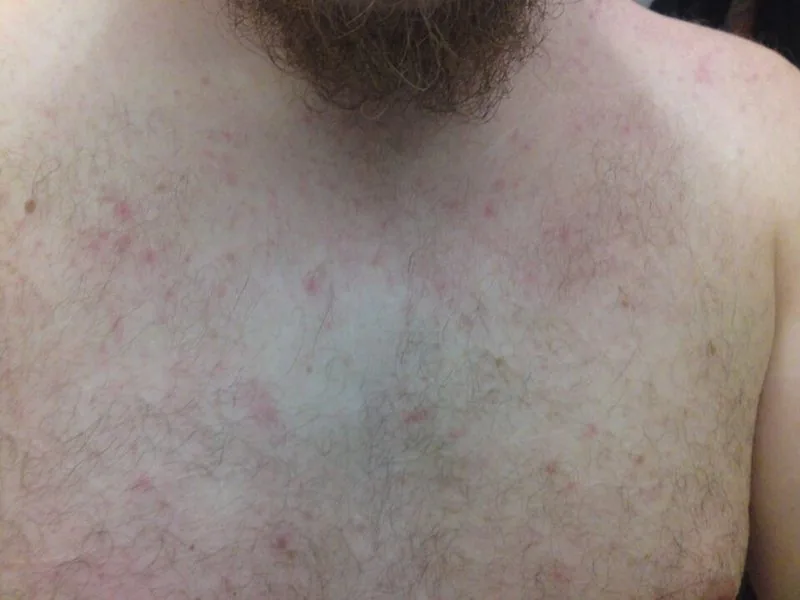
Miliaria rubra -- commonly called prickly heat -- is the most frequent type seen in adults. The obstruction occurs deeper in the epidermis, producing small red bumps surrounded by inflamed skin. This is the type most people think of when they hear "heat rash," and it is often intensely itchy with a stinging or prickling sensation. Miliaria profunda is the least common but most severe form. It affects the deeper dermal layer and produces firm, flesh-colored papules that resemble goosebumps. Because sweat cannot reach the skin surface at all, miliaria profunda can impair the body's ability to cool itself and may lead to heat exhaustion if left untreated.
Heat Rash Symptoms to Watch For
The hallmark question patients ask is: is heat rash itchy? In most cases, yes. Mild heat rash may present as a subtle prickling or tingling sensation, while more developed miliaria rubra can produce intense itching and a burning, stinging quality that worsens with continued sweating or friction from clothing. The affected skin typically appears red or pink with clusters of small raised bumps, sometimes topped with tiny blisters.
Heat rash symptoms vary depending on the type and severity, but common signs include:
- Small red or pink bumps in areas prone to sweating such as the neck, chest, back, groin, and skin folds.
- Prickling, stinging, or itching that intensifies in warm environments or during physical activity.
- Tiny clear or white blisters that may break and crust over.
- Localized swelling or mild tenderness in the affected area.
- Skin that feels rough or sandpaper-like to the touch.
It is important to distinguish heat rash from other conditions that can look similar, such as eczema, fungal infections, or hives. If your rash is accompanied by fever, rapidly spreading redness, pus or drainage, swollen lymph nodes, or red streaks extending from the rash, these may indicate a secondary infection or a different condition entirely and should be evaluated by a healthcare provider promptly.
Home Remedies for Heat Rash
The most effective first step for treating heat rash at home is removing the trigger. Move to a cooler environment, preferably air-conditioned, and allow the skin to cool and dry completely. Remove tight or occlusive clothing and replace it with loose-fitting, breathable fabrics like cotton. In most cases of mild heat rash, simply cooling the skin and reducing sweating will allow the blocked ducts to clear and the rash to resolve within one to three days.
Several home remedies can help soothe symptoms while the rash heals:
- Cool compresses -- apply a damp, cool cloth to affected areas for 10 to 15 minutes several times daily to reduce inflammation and itching.
- Aloe vera gel -- pure aloe vera for heat rash works well thanks to its natural anti-inflammatory and cooling properties. Apply a thin layer to clean, dry skin.
- Calamine lotion -- helps relieve itching and has a mild drying effect on weepy bumps.
- Colloidal oatmeal baths -- soaking in lukewarm (not hot) water with colloidal oatmeal calms widespread itching and irritation.
- Over-the-counter hydrocortisone cream (1%) -- apply sparingly to intensely itchy patches for short-term relief. Short courses of up to one to two weeks on the same area are generally safe, but if the rash has not improved after a week or keeps returning, see a provider to rule out infection or another cause rather than continuing topical steroids indefinitely.
Avoid products that can worsen duct blockage, including heavy moisturizers, petroleum-based ointments, and thick sunscreens on affected skin. Resist the urge to scratch, as broken skin is vulnerable to bacterial infection. Gently pat the area dry rather than rubbing after bathing, and allow skin folds to air-dry completely before dressing.
When Heat Rash Needs Medical Treatment
Most heat rashes clear up on their own with simple cooling measures, but certain situations call for professional medical evaluation. You should see a provider if your rash persists for more than three to five days despite consistent home treatment, if symptoms are worsening rather than improving, or if the rash is causing significant pain rather than just itching. Heat rash that covers a large area of the body or recurs frequently may also benefit from a clinical assessment to rule out underlying contributing factors.
Seek prompt medical attention if you notice any signs of secondary bacterial infection, which can develop when scratching or friction introduces bacteria into irritated skin. Warning signs include:
- Increasing pain, swelling, or warmth at the rash site
- Pus or cloudy drainage from the bumps
- Red streaks extending outward from the rash
- Fever or chills
- Swollen lymph nodes near the affected area
A provider may prescribe a stronger topical corticosteroid to control severe inflammation, topical or oral antibiotics if infection is present, or anhydrous lanolin to help prevent further duct obstruction. Through a telehealth rash evaluation at InnoCre, our providers can assess your heat rash, determine whether prescription treatment is warranted, and send any necessary medications directly to your pharmacy -- all from the comfort of your home.
How to Prevent Heat Rash
Preventing heat rash comes down to keeping the skin cool, dry, and free from prolonged sweat exposure. During hot and humid weather, stay in air-conditioned or well-ventilated spaces when possible, especially during peak afternoon heat. If you work or exercise outdoors, take regular breaks in the shade or indoors to allow your body to cool down and your sweat to evaporate before it accumulates on the skin.
Practical strategies to reduce your risk of heat rash include:
- Wear lightweight, loose-fitting clothing -- choose breathable natural fabrics like cotton or moisture-wicking synthetic materials designed for athletic wear. Avoid tight waistbands, bra straps, and clingy fabrics that trap heat.
- Shower promptly after sweating -- rinse off sweat as soon as possible after exercise or heavy physical work, and dry skin thoroughly before dressing.
- Use lightweight skin products -- opt for non-comedogenic, oil-free moisturizers and sunscreens that will not block sweat ducts. Avoid heavy creams and ointments in warm weather.
- Keep skin folds dry -- gently pat dry areas under the breasts, in the groin, and in elbow and knee creases. A light dusting of cornstarch-based powder can help absorb excess moisture in these areas.
- Sleep cool -- use lightweight bedding, run a fan, and keep the bedroom temperature comfortable to avoid overnight sweating.
For infants, avoid overdressing and use only one more layer than an adult would wear in the same environment. Check for heat rash in neck folds, the diaper area, and behind the ears. If you or your child experience recurrent heat rash episodes that are difficult to manage, a provider can help identify triggers and recommend a personalized prevention plan through a convenient online visit.
Frequently Asked Questions
Is heat rash itchy?
Yes. Heat rash commonly causes itching, prickling, or a stinging sensation. The itching is caused by blocked sweat ducts and inflammation in the affected skin.
How long does a heat rash last?
Mild heat rash typically resolves within 1 to 3 days once you cool down and reduce sweating. More severe forms like miliaria profunda may take several weeks.
Does aloe vera help heat rash?
Aloe vera can provide soothing relief for heat rash due to its anti-inflammatory properties. Apply pure aloe vera gel to the affected area after cooling the skin.
When should I see a doctor for heat rash?
See a provider if the rash lasts more than a few days, shows signs of infection like pus or increasing redness, is accompanied by fever, or covers a large area of the body.
What are heat rash causes?
When evaluating heat rash causes, clinicians consider miliaria pustulosa, wear loose, form of heat rash, and sweat glands. An InnoCre telehealth visit covers a same-day symptom review, lab orders at a local lab when needed, and a prescription sent to your pharmacy if appropriate.
How does an InnoCre telehealth visit work?
After you book, you complete a short intake form, then connect with a board-certified provider by video on the same day in most cases. The provider reviews your symptoms and history, orders lab work at a local lab if needed, and sends any prescription to the pharmacy of your choice. A new-patient visit is a flat $68 with no insurance required.
Sources
Clinical references used in this article:
- Heat Illness. MedlinePlus, National Library of Medicine.
- Babies and Heat Rashes. MedlinePlus Medical Encyclopedia.
- Rashes. MedlinePlus, National Library of Medicine.
- Skin Conditions. MedlinePlus, National Library of Medicine.
Get the Care You Need Today
A board-certified provider can evaluate your symptoms and recommend treatment. Same-day visits available for patients in Pennsylvania, Maryland, Washington, and Delaware.
Book a Visit →Visits start at $68 · HSA/FSA accepted · PA, MD, WA & DE
Atul S. Vellappally, DNP, CRNP, FNP-BC
Founder, InnoCre Telehealth. Board-certified Family Nurse Practitioner with doctoral-level training in evidence-based and precision medicine. Licensed in Pennsylvania, Maryland, Washington, and Delaware.
This article is for informational purposes only and does not constitute medical advice. If you are experiencing a medical emergency, call 911.
Related Services