Common eczema triggers, how to manage flares, and when prescription treatment is needed. Get eczema treatment online.
Need Care Today?
Get a same-day telehealth visit with a board-certified provider.
Licensed in PA, MD, WA & DE
Book a Visit →What Is Eczema
Eczema, also known as atopic dermatitis, is a chronic inflammatory skin condition that causes patches of skin to become dry, itchy, red, and inflamed. It is one of the most common skin conditions, affecting an estimated 31 million Americans. While eczema can develop at any age, it most frequently begins in childhood -- approximately 60 percent of cases appear within the first year of life.
Eczema occurs when the skin's protective barrier is compromised, allowing moisture to escape and irritants to penetrate more easily. This barrier dysfunction has both genetic and environmental components. People with eczema often have a variation in the filaggrin gene, which plays a critical role in maintaining the skin barrier. The condition also involves an overactive immune response that produces inflammation in the skin.
Eczema is not contagious and cannot be spread through contact. It tends to run in families and is closely associated with other atopic conditions, including allergies and asthma. While there is no cure, effective treatments can control symptoms, reduce flare-ups, and significantly improve quality of life.
Common Triggers
Eczema flare-ups are often triggered by specific environmental, physical, or emotional factors. Identifying and avoiding your personal triggers is one of the most effective ways to manage the condition. Common triggers include:
- Irritants -- soaps, detergents, shampoos, body washes, and household cleaning products that contain fragrances, dyes, or harsh chemicals
- Allergens -- dust mites, pet dander, pollen, and mold can trigger flares in people with allergic sensitivities
- Weather and climate -- cold, dry air in winter strips moisture from skin, while excessive heat and sweating in summer can also provoke flares
- Fabrics -- wool, polyester, and rough or scratchy materials worn against the skin
- Stress -- emotional stress triggers an inflammatory response that can worsen eczema or initiate a new flare
- Hormonal changes -- menstrual cycles, pregnancy, and menopause can affect eczema severity
- Food allergies -- in some individuals, particularly children, foods such as dairy, eggs, nuts, soy, and wheat may trigger flares
- Skin infections -- bacterial, viral, or fungal infections can worsen eczema symptoms
Keeping a symptom diary that tracks your flares alongside potential exposures can help you and your provider identify patterns and develop a targeted prevention strategy.
Recognizing Eczema Symptoms
Eczema symptoms vary from person to person and can range from mild dryness to severe, widespread inflammation. The most common signs include:
- Dry, sensitive skin
- Intense itching, which is often worse at night
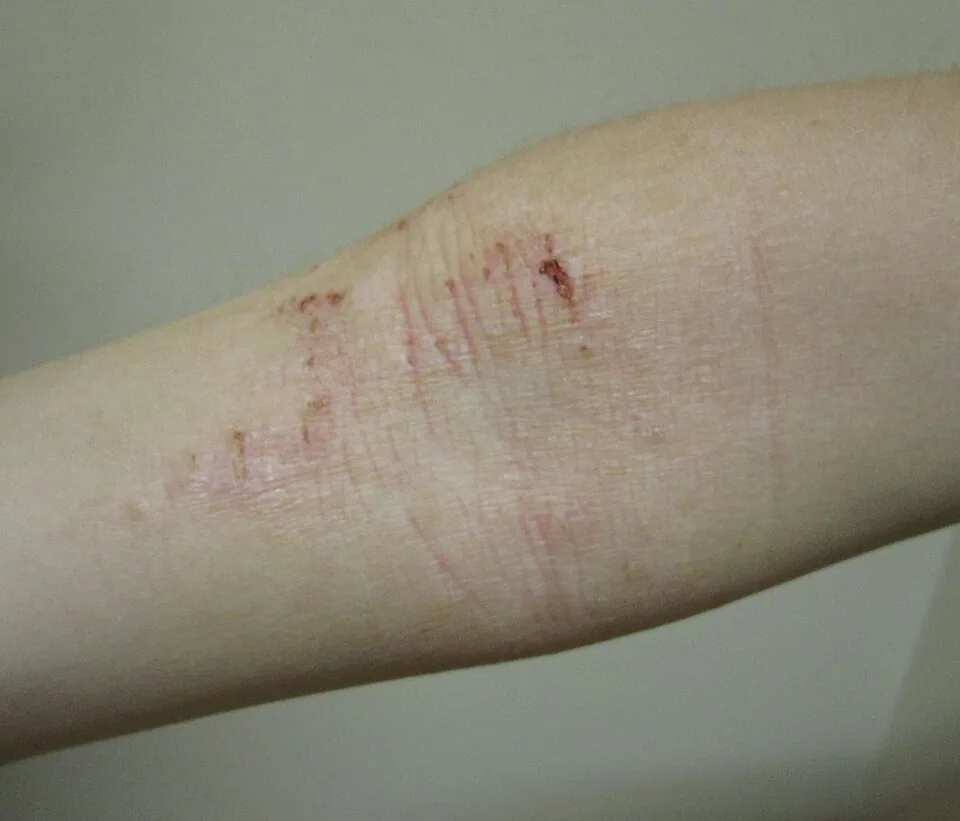
- Red or brownish-gray patches, particularly on the hands, feet, ankles, wrists, neck, upper chest, eyelids, and inside the bends of elbows and knees
- Small, raised bumps that may leak fluid when scratched
- Thickened, cracked, or scaly skin from chronic scratching (lichenification)
- Raw, swollen skin from persistent scratching
In infants, eczema most commonly appears on the face, scalp, and outer surfaces of the arms and legs. In older children and adults, it tends to favor the creases of the elbows, behind the knees, and the hands and feet. Eczema can also resemble other skin conditions such as contact dermatitis or psoriasis, so getting a proper evaluation is important for accurate diagnosis and treatment.
Signs that eczema may be infected include increased redness, warmth, swelling, yellow or green crusting, pus-filled bumps, or worsening pain. Infected eczema requires prompt medical treatment, often with antibiotics.
Home Management Strategies

Consistent moisturizing within 3 minutes of bathing is the foundation of eczema management.
A consistent daily skincare routine is the foundation of eczema management. The following strategies can help maintain your skin barrier and reduce the frequency and severity of flares:
- Moisturize frequently -- apply a thick, fragrance-free moisturizer or ointment at least twice daily, and always within 3 minutes of bathing to lock in moisture. Ointments and creams are more effective than lotions.
- Bathe wisely -- use lukewarm (not hot) water and limit baths or showers to 10 to 15 minutes. Use gentle, fragrance-free cleansers instead of soap.
- Choose soft fabrics -- wear loose-fitting clothing made of soft cotton or bamboo. Avoid wool and rough synthetic materials directly against the skin.
- Use fragrance-free products -- switch to fragrance-free laundry detergent, body wash, and household cleaning products.
- Manage the itch -- keep nails short to minimize damage from scratching. Apply cool compresses to itchy areas. Consider wearing cotton gloves at night if nighttime scratching is a problem.
- Control indoor humidity -- use a humidifier in dry months to keep indoor humidity between 30 and 50 percent.
- Manage stress -- since stress is a known trigger, incorporating relaxation techniques such as deep breathing, meditation, or regular exercise can help reduce flares.
Over-the-Counter Treatments
For mild eczema, over-the-counter (OTC) products can provide meaningful relief. Options include:
- Hydrocortisone cream (1%) -- a mild topical steroid available without a prescription that can reduce itching, redness, and inflammation during mild flares. It should be used for short periods (up to 7 days) on affected areas, and avoided on the face and skin folds unless directed by a provider.
- Colloidal oatmeal products -- bath soaks, lotions, and creams containing colloidal oatmeal help soothe irritated skin and restore the moisture barrier.
- Ceramide-containing moisturizers -- products with ceramides help repair the damaged skin barrier that is characteristic of eczema. These are available from brands such as CeraVe, Cetaphil, and Vanicream.
- Antihistamines -- oral antihistamines such as diphenhydramine (Benadryl) may help reduce nighttime itching and improve sleep, though they do not treat the underlying inflammation.
While OTC treatments are helpful for mild or occasional flares, they have limitations. If you find yourself using hydrocortisone cream for more than a week at a time or your eczema is not responding to OTC products, it is time to consult a provider for stronger treatment options.
When You Need Prescription Treatment
Prescription treatment becomes necessary when eczema is moderate to severe, does not respond to OTC products, or significantly affects your daily life. A provider may recommend one or more of the following:
- Prescription topical corticosteroids -- stronger than OTC hydrocortisone, these are available in varying potencies to match the severity and location of your eczema. They are the first-line prescription treatment for flares.
- Topical calcineurin inhibitors -- tacrolimus (Protopic) and pimecrolimus (Elidel) are non-steroidal anti-inflammatory creams that are particularly useful for sensitive areas such as the face, eyelids, and skin folds where long-term steroid use is not ideal.
- Topical PDE4 inhibitors -- crisaborole (Eucrisa) is a newer non-steroidal option that reduces inflammation and itching for mild to moderate eczema.
- Antibiotics -- if eczema becomes infected, oral or topical antibiotics may be needed to clear the infection before other treatments can be effective.
You should seek prescription eczema treatment if your symptoms interfere with sleep or daily activities, cover large areas of the body, show signs of infection, or have not improved after 2 weeks of consistent OTC treatment and good skincare practices.
Getting Eczema Treatment Online
Telehealth is an effective and convenient way to get eczema treatment. During a virtual visit, a provider can evaluate your skin via high-quality video, discuss your symptom history and triggers, and prescribe appropriate topical or oral medications. For eczema, visual assessment is often sufficient to make a diagnosis and guide treatment decisions.
A telehealth eczema visit may be right for you if:
- You need a new or refilled prescription for topical steroids or other eczema medications
- Your current treatment plan is not adequately controlling your symptoms
- You are experiencing a new flare and want guidance on management
- You suspect your eczema may be infected and need evaluation
- You want help identifying your triggers and building a long-term management plan
InnoCre Telehealth offers same-day virtual visits for patients in Pennsylvania, Maryland, Washington, and Delaware. Your provider can also evaluate related skin conditions such as other rashes or allergic reactions that may be contributing to your symptoms. Getting expert guidance can help you break the cycle of flares and find lasting relief.
Frequently Asked Questions
What triggers eczema flare-ups?
Common triggers include dry skin, stress, irritants like soaps and detergents, allergens, weather changes, certain fabrics, and food allergies in some individuals.
Can eczema be cured?
There is no cure for eczema, but it can be effectively managed with proper skincare, trigger avoidance, and medications. Many children outgrow eczema by adulthood.
When should I see a doctor for eczema?
See a provider if eczema affects daily activities, does not respond to over-the-counter treatments, shows signs of infection, or covers large areas of the body.
Can telehealth treat eczema?
Yes. A provider can evaluate your skin via video, discuss your triggers and history, and prescribe topical steroids, calcineurin inhibitors, or other treatments.
How does an InnoCre telehealth visit work?
After you book, you complete a short intake form, then connect with a board-certified provider by video on the same day in most cases. The provider reviews your symptoms and history, orders lab work at a local lab if needed, and sends any prescription to the pharmacy of your choice. A new-patient visit is a flat $68 with no insurance required.
Sources
Clinical references used in this article:
- Eczema. MedlinePlus, National Library of Medicine.
- Rashes. MedlinePlus, National Library of Medicine.
- Skin Conditions. MedlinePlus, National Library of Medicine.
Get the Care You Need Today
A board-certified provider can evaluate your symptoms and recommend treatment. Same-day visits available for patients in Pennsylvania, Maryland, Washington, and Delaware.
Book a Visit →Visits start at $68 · HSA/FSA accepted · PA, MD, WA & DE
Atul S. Vellappally, DNP, CRNP, FNP-BC
Founder, InnoCre Telehealth. Board-certified Family Nurse Practitioner with doctoral-level training in evidence-based and precision medicine. Licensed in Pennsylvania, Maryland, Washington, and Delaware.
This article is for informational purposes only and does not constitute medical advice. If you are experiencing a medical emergency, call 911.
Related Services