Tick bite symptoms, timeline, and when to worry about Lyme disease. Learn what to do after a tick bite and when to see a provider.
Need Care Today?
Get a same-day telehealth visit with a board-certified provider.
Licensed in MD, WA & DE
Book a Visit →How to Safely Remove a Tick
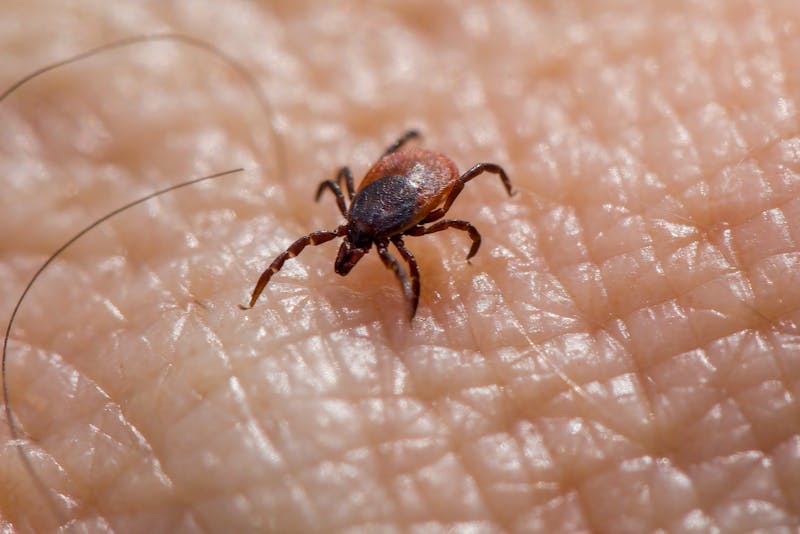
A tick embedded in human skin. Ticks attach painlessly and can feed for days if not discovered.
Proper tick removal is the single most important step you can take after discovering an attached tick. The goal is to pull the tick out cleanly, without squeezing its body or leaving mouthparts embedded in your skin. To do this correctly, use fine-tipped tweezers (not your fingers and not a match or petroleum jelly, which are outdated and ineffective methods). Grasp the tick as close to your skin's surface as possible and pull upward with steady, even pressure. Avoid twisting or jerking, as this can cause the mouthparts to break off.
After removing the tick, clean the bite area thoroughly with rubbing alcohol or soap and water. If you can, save the tick in a sealed plastic bag or take a clear photo of it. Identifying the tick species can help your provider determine your risk level for Lyme disease and other tick-borne illnesses. Blacklegged ticks (also called deer ticks) are the primary carriers of Lyme disease in the eastern and midwestern United States, while dog ticks and lone star ticks carry other infections.
One common concern is whether the tick's head was fully removed. If a small piece of the mouthpart remains, do not dig at it with a needle. In most cases, your body will push the fragment out on its own as the skin heals. Keep the area clean and watch for signs of infection. If you are unsure whether you removed the tick properly or want guidance on next steps, a telehealth urgent care visit can help you assess your risk without a trip to the emergency room.
What a Normal Tick Bite Looks Like
After you remove a tick, it is completely normal to see a small red bump at the bite site. This reaction is caused by your skin's localized immune response to the tick's saliva and does not mean you have been infected with Lyme disease. The redness is usually less than the size of a dime, appears within hours of removal, and typically fades within a few days. Many people also notice mild itching or tenderness around the bite, which can persist for a week or two.
A normal tick bite may also form a small, firm bump similar to a mosquito bite. This is especially common with lone star tick bites, which tend to cause more noticeable local irritation. The key feature of a normal bite reaction is that it does not expand over time. If the redness stays the same size or shrinks over the first 24 to 48 hours, it is almost certainly a benign inflammatory response rather than a sign of infection.
To ease discomfort from a normal tick bite, you can apply a cold compress and take an over-the-counter antihistamine for itching. Avoid scratching the area, as this can break the skin and introduce bacteria, potentially leading to a secondary skin infection. If you are wondering how long a tick bite will itch, most people find that the itching resolves within one to two weeks. If the itching worsens or you notice the redness spreading, it is time to have a provider evaluate the bite. You can upload a photo of the bite during an online rash evaluation for a quick assessment.
Signs of Lyme Disease After a Tick Bite

Erythema migrans: the classic bullseye rash of Lyme disease. An expanding red ring with central clearing appearing 3 to 30 days after a tick bite. Image: CDC/Public Health Image Library.
The hallmark sign of Lyme disease is a distinctive rash called erythema migrans, which appears in roughly 70 to 80 percent of people who are infected. This rash typically begins as a small red area at the tick bite site and gradually expands over several days to weeks, sometimes reaching 12 inches or more in diameter. In many cases, the center of the rash clears as it grows, creating the well-known bullseye or target-shaped pattern. However, it is important to know that not all Lyme rashes look like a classic bullseye. Some appear as a solid red expanding circle, and some people never develop a rash at all.
Beyond the rash, early Lyme disease can produce symptoms that feel like the flu. Watch for these warning signs in the days and weeks following a tick bite:
- Fatigue that feels out of proportion to your activity level
- Fever and chills, usually low-grade (around 100 to 101 degrees Fahrenheit)
- Headache and neck stiffness
- Muscle and joint aches, sometimes described as migratory (moving from one area to another)
- Swollen lymph nodes near the bite site
If Lyme disease is not treated in the early stage, it can progress to more serious complications over weeks to months, including joint swelling (particularly in the knees), nerve pain, facial palsy (drooping on one side of the face), and heart rhythm disturbances. Early detection and treatment with antibiotics are highly effective, which is why recognizing these signs promptly matters so much. If you notice any of these symptoms after a tick bite, do not wait to see if they resolve on their own. A same-day telehealth visit can get you started on treatment quickly.
The Tick Bite Timeline: Day by Day
Understanding the timeline of a tick bite can help you know what to expect and when to be concerned. Here is a general day-by-day guide for what happens after a tick bite:
- Day 1 (0 to 24 hours): A small red bump may appear at the bite site. This is a normal skin reaction to the tick's saliva and is not a sign of infection. Mild itching and tenderness are common.
- Days 2 to 3: The initial redness should remain stable or begin to fade. If the area is getting larger rather than smaller, take a photo and note the size. Circle the edge of the redness with a pen so you can track any expansion.
- Days 3 to 7: A normal bite continues to heal and the bump shrinks. If an expanding rash begins during this window, it may indicate early Lyme disease. Flu-like symptoms such as fatigue, low-grade fever, or body aches could also appear.
- Days 7 to 14: This is a critical monitoring period. The erythema migrans rash of Lyme disease most commonly appears between 7 and 14 days after the bite, though it can appear as early as 3 days or as late as 30 days.
- Days 14 to 30: Continue to monitor for any new rash, joint pain, or neurological symptoms such as numbness, tingling, or facial weakness. Late-appearing symptoms should still be evaluated promptly.
It is helpful to take daily photos of the bite site during the first two weeks so you can share them with a provider if needed. Even if the bite looks normal, keeping a brief log of how you feel each day (energy level, any aches, temperature) gives your provider valuable information if symptoms do develop later.
Keep in mind that this timeline applies specifically to Lyme disease. Other tick-borne illnesses, such as anaplasmosis, ehrlichiosis, and Rocky Mountain spotted fever, can have different onset windows and symptom profiles. If you develop a fever, severe headache, or widespread rash (especially a spotted or petechial rash) in the two weeks after a tick bite, seek medical attention right away regardless of how the bite site looks.
When to Seek Medical Attention
Not every tick bite requires a trip to the doctor, but there are specific situations where medical evaluation is important. You should contact a healthcare provider if you notice any of the following after a tick bite:
- An expanding rash at or near the bite site, regardless of whether it has a bullseye pattern
- A rash that appears anywhere on your body within 30 days of the bite
- Fever, chills, or flu-like symptoms in the weeks following the bite
- Joint swelling or pain, especially in the knees
- Facial drooping or numbness on one side
- Heart palpitations or an irregular heartbeat
- Signs of an infected tick bite such as increasing redness, warmth, pus, or red streaking from the site
You should also seek care if you were unable to fully remove the tick, if you are unsure how long the tick was attached, or if you know you were bitten by a blacklegged (deer) tick in a region where Lyme disease is prevalent. Tick attachment time matters because Lyme disease transmission generally requires the tick to be attached for 36 to 48 hours, though this is not a guarantee of safety if the tick was removed earlier.
A telehealth visit is an excellent option for tick bite evaluation because your provider can review photos of the bite and the tick itself, assess your geographic and exposure risk, and determine whether preventive treatment is appropriate. Through InnoCre's urgent care telehealth service, you can get a same-day evaluation and, if needed, a prescription sent directly to your pharmacy without waiting in a clinic.
Preventive Antibiotic Treatment
In certain situations, a single dose of the antibiotic doxycycline can be given after a tick bite to reduce the risk of developing Lyme disease. This is known as post-exposure prophylaxis, and it is recommended by the Infectious Diseases Society of America when all of the following criteria are met:
- The tick has been identified as a blacklegged (deer) tick (Ixodes scapularis or Ixodes pacificus)
- The tick is estimated to have been attached for 36 hours or more (engorged ticks suggest prolonged attachment)
- The antibiotic can be started within 72 hours of tick removal
- The bite occurred in a geographic area where Lyme disease is common (the Northeast, mid-Atlantic, and upper Midwest carry the highest risk)
- The patient has no contraindication to doxycycline (a single prophylactic dose is generally considered acceptable in pregnancy when clinically indicated)
When indicated, the standard prophylactic dose is a single 200 mg dose of doxycycline for adults (4.4 mg/kg, up to 200 mg, for children). Studies have shown this approach reduces the risk of developing Lyme disease by approximately 87 percent when given within the recommended window. The medication is generally well tolerated, though it should be taken with food to minimize stomach upset, and you should avoid prolonged sun exposure while it is in your system.
If you do not meet all the criteria for preventive treatment, your provider will likely recommend a watch-and-wait approach. This means monitoring the bite site closely for 30 days and returning for evaluation if an expanding rash or other symptoms develop. It is important to understand that not receiving preventive antibiotics does not mean you will definitely get Lyme disease. Even in high-risk areas, only a small percentage of tick bites result in infection. Your provider can help you weigh the risks and benefits based on your specific situation during a telehealth consultation.
How to Prevent Tick Bites
The best strategy for avoiding tick-borne illness is preventing tick bites in the first place. Ticks are most active from April through September, though they can remain active in mild winters. When spending time outdoors in wooded, grassy, or brushy areas, take these precautions to protect yourself and your family:
- Wear protective clothing. Long sleeves, long pants tucked into socks, and closed-toe shoes create a physical barrier. Light-colored clothing makes ticks easier to spot.
- Use insect repellent. Apply EPA-registered repellents containing DEET (20 to 30 percent), picaridin, or oil of lemon eucalyptus to exposed skin. Treat clothing and gear with 0.5 percent permethrin for added protection.
- Stay on trails. Avoid walking through tall grass, leaf litter, and dense brush where ticks wait on vegetation with their legs extended (a behavior called questing).
- Perform thorough tick checks. After spending time outdoors, check your entire body carefully. Ticks prefer warm, hidden areas such as the scalp, behind the ears, underarms, groin, behind the knees, and along the waistline.
- Shower within two hours. Showering soon after coming indoors has been shown to reduce the risk of tick-borne disease by helping wash off unattached ticks and providing an opportunity for a full-body check.
- Check pets and gear. Ticks can hitchhike on dogs, backpacks, and clothing. Tumble dry clothes on high heat for 10 minutes to kill any ticks that may be clinging to fabric.
Around your home, you can reduce tick habitat by keeping grass mowed short, clearing leaf litter and brush piles, creating a 3-foot gravel or wood chip barrier between your lawn and wooded areas, and discouraging deer from entering your yard. These landscape modifications can significantly reduce the number of ticks in your immediate environment.
If you spend a lot of time outdoors in tick-endemic areas and have questions about prevention strategies or want to discuss your risk, a provider at InnoCre can offer personalized guidance during a telehealth visit. Being proactive about prevention is always easier than treating an infection after the fact.
Frequently Asked Questions
How long does a tick bite take to heal?
A normal tick bite without infection typically heals within 1 to 2 weeks. Mild redness at the bite site is common for a few days and does not necessarily indicate Lyme disease.
What does a Lyme disease rash look like?
The classic Lyme disease rash, called erythema migrans, appears as an expanding red circle that may develop a bullseye pattern. It typically appears 3 to 30 days after the bite and expands over days to weeks.
How long does a tick bite itch?
Itching from a tick bite can last a few days to 2 weeks. Persistent itching beyond 2 weeks or itching accompanied by an expanding rash should be evaluated by a provider.
Can a telehealth provider treat a tick bite?
Yes. A provider can evaluate your bite via photo and video, assess your risk for Lyme disease based on location and tick type, and prescribe preventive antibiotics when indicated.
Get the Care You Need Today
A board-certified provider can evaluate your symptoms and recommend treatment. Same-day visits available for patients in Maryland, Washington, and Delaware.
Book a Visit →Visits start at $68 · Insurance accepted · MD, WA & DE
Atul S. Vellappally, DNP, CRNP, FNP-BC
Founder, InnoCre Telehealth. Board-certified Family Nurse Practitioner with doctoral-level training in evidence-based and precision medicine. Licensed in Maryland, Washington, and Delaware.
This article is for informational purposes only and does not constitute medical advice. If you are experiencing a medical emergency, call 911.
Related Services