Fungal Skin Infection Treatment
Ringworm, athlete's foot, jock itch, or tinea versicolor? Get diagnosed and treated online with prescription antifungals when clinically appropriate, from a board-certified provider — same-day availability in PA, MD, WA & DE.
Fungal Skin Infections — Types, Causes & Clinical Presentations
Superficial fungal skin infections — collectively called "tinea" or "dermatophytosis" — are among the most common skin conditions worldwide. They are caused by dermatophytes, a group of fungi that feed on keratin. These fungi invade only the outer keratin layers (skin, hair, nails) and do not penetrate living tissue in people with healthy immune systems. The three genera responsible for human infection are Trichophyton, Microsporum, and Epidermophyton.
Infections are classified by body site rather than by species, using Latin anatomical names:
- Tinea corporis (trunk and extremities)
- Tinea pedis (feet)
- Tinea cruris (groin)
- Tinea capitis (scalp)
- Tinea unguium / onychomycosis (nails)
- Tinea versicolor (a distinct condition caused by Malassezia yeast, not a true dermatophyte)
Tinea corporis — commonly called "ringworm" despite having nothing to do with worms — shows up as a ring-shaped, scaly plaque with a raised, well-defined red border and clearing in the center. It is highly recognizable via photo assessment.
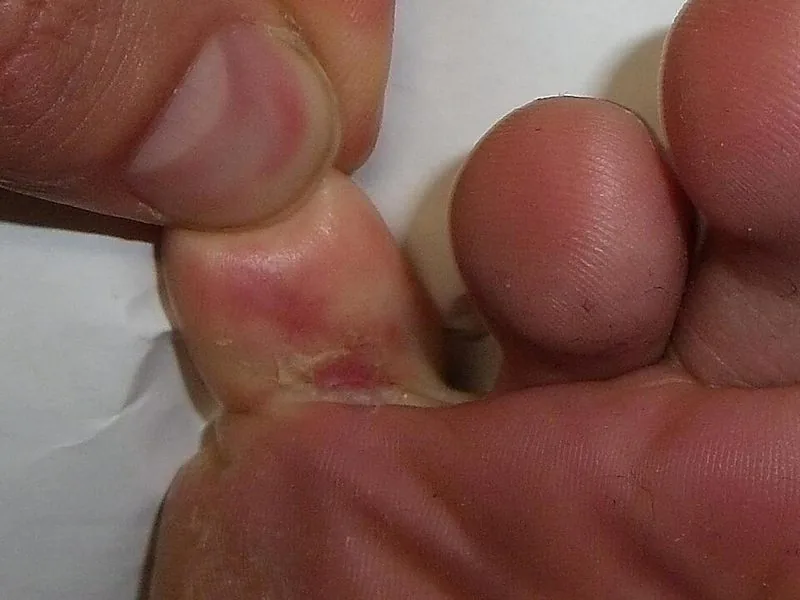
Tinea pedis (athlete's foot) typically shows softened, peeling, and cracked skin between the toes. It often extends to the soles (the "moccasin" pattern) or appears as blister-like lesions on the bottom of the foot.
Tinea cruris (jock itch) shows up as a sharply defined, itchy red rash in the groin folds that typically spares the scrotum — in contrast to candidal intertrigo, which involves it.
Tinea versicolor, caused by Malassezia furfur, appears as lighter or darker patches with a fine scale, most often on the upper trunk and shoulders. It usually does not itch.
Your board-certified provider evaluates fungal skin infections via photo and video assessment. The focus is on how the lesions look, where they appear, and the clinical hallmarks of each tinea subtype. The ring shape of tinea corporis, the softened skin between the toes of tinea pedis, and the patchy spots of tinea versicolor are usually clear in high-quality photos. In most cases, this allows confident diagnosis and treatment without a KOH prep or culture.
Fungal Infections We Treat Online
Tinea Corporis (Ringworm)
Annular, scaly plaque with raised border. Topical terbinafine or clotrimazole 2–4 weeks
Tinea Pedis (Athlete's Foot)
Interdigital scaling/fissuring or moccasin pattern. Topical antifungals ± oral for severe
Tinea Cruris (Jock Itch)
Inguinal rash with raised border, scrotal sparing. Topical antifungals + moisture control
Tinea Versicolor (Malassezia)
Hypo/hyperpigmented patches on trunk. Ketoconazole shampoo, selenium sulfide, fluconazole
Tinea Manuum (Hand Ringworm)
Unilateral palm scaling often associated with bilateral tinea pedis ("two feet, one hand")
Candidal Intertrigo
Satellite lesions, beefy red rash in skin folds. Involves scrotum (vs tinea cruris). Topical nystatin or azoles
Recurrent / Extensive Tinea Pedis
Involving dorsum or widespread. Oral terbinafine 2 weeks or fluconazole weekly pulse dosing
Prevention & Recurrence Counseling
Moisture control, footwear guidance, treatment of household contacts and concurrent onychomycosis
Antifungal Treatments — Topical, Oral & Special Cases
For most localized tinea infections — corporis, cruris, and limited pedis — topical antifungals are the first-line treatment. Both the allylamine class (terbinafine 1% cream or spray) and the azole class (clotrimazole 1%, miconazole 2%, ketoconazole 2%) are effective. Terbinafine is generally preferred for dermatophyte infections. It kills the fungus rather than just slowing it, needs a shorter course (1–2 weeks), and has lower relapse rates than azoles.
Treatment usually runs 2–4 weeks for tinea corporis and cruris. Tinea pedis often needs 4 weeks with topical agents. To prevent relapse, keep treating for 1–2 weeks after the rash appears to clear.
Oral antifungals are appropriate in several situations:
- Extensive or widespread disease
- Immunocompromised patients
- Folliculitis-pattern tinea
- Recurrent tinea pedis despite appropriate topical treatment
- Tinea involving the nails or the scalp
Oral terbinafine 250mg daily for 2 weeks is highly effective for tinea corporis and pedis. Fluconazole 150–200mg weekly for 4–6 weeks is an alternative for tinea versicolor and suits patients who prefer weekly dosing. Tinea versicolor can also be treated with topical ketoconazole 2% shampoo (applied as a body wash, left on for 5 minutes, repeated daily for 1–2 weeks) or selenium sulfide lotion 2.5%. Patients should know that skin color may take months to even out after tinea versicolor clears, even when treatment works.
Tinea capitis — fungal infection of the scalp — is an important special case. It requires systemic antifungal therapy (oral griseofulvin or terbinafine) and cannot be treated effectively with topical antifungals alone. Tinea capitis most often affects children. It shows up as patchy scalp hair loss, scaling, and sometimes a kerion — a boggy, inflamed mass that signals severe infection. Tinea capitis needs in-person evaluation. Your provider will recognize it from your history and clinical features, then refer you to in-person care for proper management.
Tinea Capitis Requires In-Person Evaluation
Scalp ringworm (tinea capitis) cannot be managed via telehealth alone because:
- • Topical antifungals are ineffective — oral systemic treatment is required for all cases
- • KOH preparation and/or fungal culture from scalp scraping or plucked hair aids species identification and guides oral antifungal selection
- • Kerion formation (boggy, pus-filled mass on scalp) may require oral steroids to prevent permanent scarring alopecia
- • Household contacts and pets may need screening or treatment to prevent reinfection cycles
- • your provider will identify tinea capitis presentations and refer promptly to in-person care
Fungal Skin Infections — Frequently Asked Questions
How does an InnoCre telehealth visit work?
After you book, you complete a short intake form, then connect with a board-certified provider by video on the same day in most cases. The provider reviews your symptoms and history, orders lab work at a local lab if needed, and sends any prescription to the pharmacy of your choice. A new-patient visit is a flat $68 with no insurance required.
You May Also Need
Clear Up Your Fungal Infection Today
Same-day antifungal prescriptions via telehealth. Serving PA, MD, WA & DE.
Book Your Visit Now →Serving DE · MD · WA | HIPAA-Compliant | Board-Certified