Can a Rash Really Be Evaluated Online?
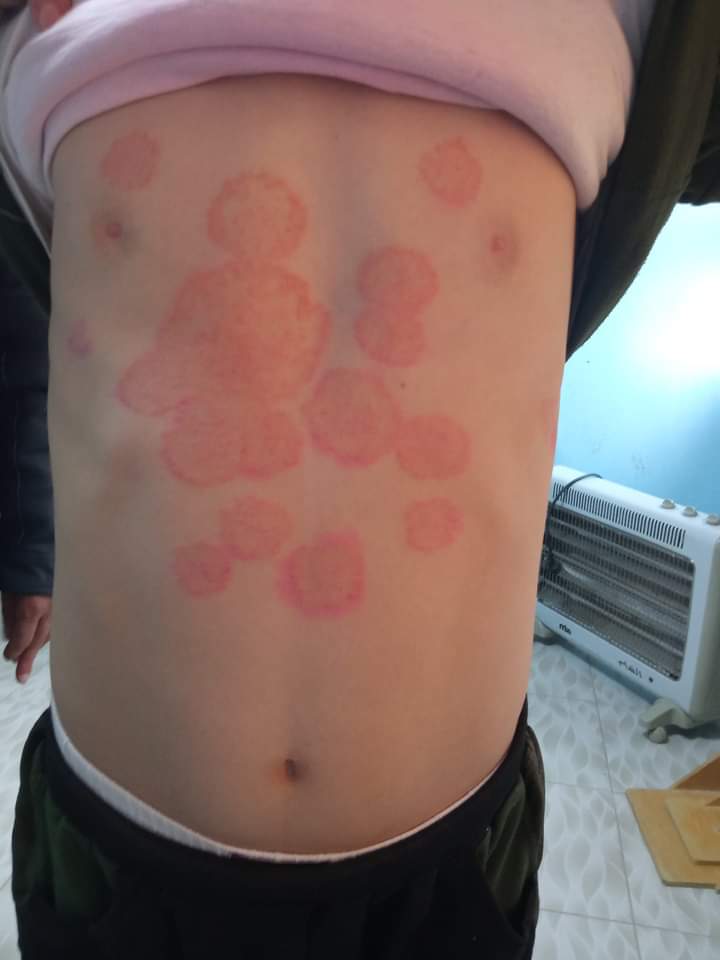
Skin conditions are among the most frequently cited use cases for telehealth dermatology, and research supports the clinical accuracy of teledermatology for a wide range of common presentations. High-resolution video cameras on modern smartphones allow a trained clinician to assess morphology (whether the lesions are macules, papules, plaques, vesicles, or pustules), distribution, color, and secondary changes such as scaling or crusting. Combined with a thorough symptom and exposure history, this enables meaningful clinical diagnosis and treatment planning for the most common rash types encountered in primary care.
our board-certified provider, leads each rash evaluation at Innocre with a structured dermatological clinical approach. Patients are asked to upload clear photographs of the affected area before the visit — multiple angles and lighting conditions improve diagnostic accuracy. During the live video session, your provider conducts a targeted history covering symptom onset, exposure history (new products, medications, plants, metals), systemic symptoms (fever, joint pain, fatigue), and prior episodes. This bidirectional approach — photo analysis plus live clinical interview — closely approximates the in-person diagnostic encounter for most common rashes.
It is important to acknowledge the inherent limitations of telehealth dermatology. Touch is absent — palpation can distinguish between blanching and non-blanching lesions, assess for induration or fluctuance in infections, and provide texture information that visual assessment alone cannot. Dermoscopy, the magnified oil-immersion examination used to assess pigmented lesions for features of melanoma, cannot be performed remotely. For this reason, Innocre does not evaluate or manage suspicious pigmented lesions, potential skin cancers, or complex dermatologic conditions requiring biopsy. When a lesion or rash presentation exceeds what telehealth can safely assess, in-person dermatology referral is provided.
Common Rash Types We Evaluate Online
Contact Dermatitis (Irritant & Allergic)
Poison ivy/oak, nickel, fragrances, latex — erythema, vesicles, intense pruritus
Viral Exanthem
Roseola, EBV, parvovirus B19 (fifth disease), enteroviral rashes in adults
Drug Rash (DERM)
Morbilliform drug eruption — typically symmetrical, blanching, trunk-predominant
Atopic Dermatitis (Eczema)
Chronic, relapsing; flexural predominance; xerosis and lichenification
Pityriasis Rosea
Herald patch followed by "Christmas tree" distribution on trunk — self-limited
Urticaria (Hives)
Raised, migratory wheals; acute vs chronic distinction guides management
Tinea (Ringworm / Athlete's Foot)
Fungal infection with characteristic border pattern; topical antifungals
Shingles (Herpes Zoster)
Dermatomal vesicular rash with pain — antivirals most effective within 72 hours
Telehealth Skin Assessment — Clinical Approach & Limitations
The clinical approach to rash evaluation at Innocre mirrors the systematic dermatologic examination taught in clinical training: identify primary lesion morphology (macule, papule, vesicle, pustule, wheal, plaque), note distribution and configuration (dermatomal, flexural, sun-exposed, centripetal), assess secondary changes (scale, crust, lichenification, excoriation), and integrate findings with the history to construct a differential diagnosis. your provider's DNP-level training includes advanced dermatological assessment as part of the family nurse practitioner scope, supported by AAD (American Academy of Dermatology) guidelines.
Telehealth dermatology is well-validated for diagnosing and treating common rashes including contact dermatitis, pityriasis rosea, viral exanthems, early shingles, mild eczema flares, and urticaria. Studies published in the Journal of the American Academy of Dermatology have demonstrated teledermatology diagnostic concordance rates of 85–95% with in-person dermatology for common inflammatory skin conditions. For these presentations, telehealth provides clinically equivalent care with dramatically improved convenience and access.
Cases that fall outside safe telehealth evaluation include: suspicious pigmented lesions (possible melanoma), blistering disorders requiring biopsy (bullous pemphigoid, pemphigus), rashes requiring Wood's lamp or dermoscopy, and severe or generalized reactions needing urgent in-person assessment. your provider will identify these cases and provide prompt referral with urgency guidance. A telehealth referral note can also be prepared to expedite in-person dermatology intake.
Emergency Warning — Rashes That Require Immediate 911 or ER
Certain rash presentations are medical emergencies. Call 911 or go to the emergency room immediately if you have:
- URGENT: Petechial or purpuric rash with fever — flat, pinpoint, non-blanching red/purple spots with fever and stiff neck may indicate meningococcemia or meningitis. This is a life-threatening emergency. Do not wait for a telehealth visit.
- URGENT: Stevens-Johnson Syndrome (SJS) / Toxic Epidermal Necrolysis (TEN) — painful widespread rash with skin peeling, blistering of the mouth and eyes, and mucous membrane erosions. Often triggered by medications (sulfonamides, allopurinol, anticonvulsants). Requires ICU-level burn care.
- • Rash accompanied by throat swelling, lip swelling, or difficulty breathing — angioedema/anaphylaxis
- • Rapidly spreading red streaks extending from a skin wound — possible bacteremia
- • Blistering rash covering large body surface areas with fever and pain